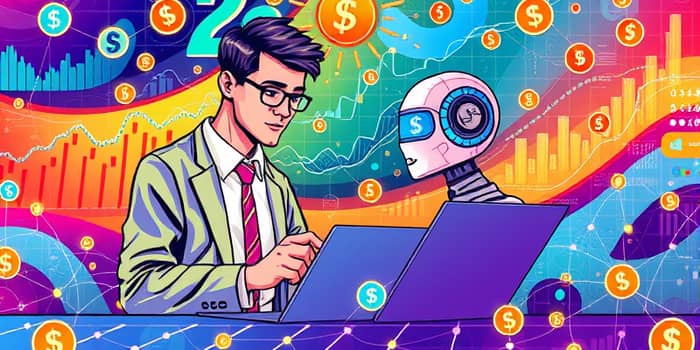
In a world awash with financial data, the ability to extract clear, actionable insights can mean the difference between seizing an opportunity and falling behind. Augmented analytics represents a transformative leap in how organizations approach data, drawing on the combined power of artificial intelligence (AI), machine learning (ML), and natural language processing (NLP) to automate and elevate every stage of the analytics lifecycle. Rather than replacing human expertise, this technology empowers professionals by streamlining tedious processes and highlighting critical trends, enabling them to focus on strategy and innovation with unprecedented speed and precision.
At its core, augmented analytics integrates cutting-edge algorithms with human creativity, creating a symbiotic relationship that amplifies strengths on both sides. From the moment data enters the system, AI-driven routines handle tasks such as cleansing, transformation, and anomaly detection, while ML models sift through high-dimensional data to spot patterns that might elude even seasoned analysts. Natural language querying allows team members to engage with data conversationally, asking complex questions without writing a single line of code.
By automating repetitive chores and surfacing the most relevant findings, augmented analytics helps financial professionals make sense of vast data streams. Whether evaluating market trends, assessing credit risk, or forecasting cash flow, users gain context-rich explanations alongside visual representations, ensuring that every decision is both data-driven and transparent.
The process begins with seamless data integration, pulling information from diverse sources such as trading platforms, customer relationship systems, and compliance databases. AI-powered engines then perform feature engineering and outlier detection, flagging anomalies in transaction patterns or sudden shifts in portfolio performance. These automated steps occur in real time, enabling organizations to stay ahead of emerging risks and opportunities.
Sophisticated algorithms ranking hypotheses by statistical significance and business relevance auto-generate visualizations, guiding users through interactive dashboards. Natural language explanations accompany each chart, describing key drivers, correlations, and forecasts, so analysts can quickly validate insights or explore new lines of inquiry without writing complex queries.
Financial institutions that adopt augmented analytics reap a host of powerful advantages. According to recent studies, decision-making timelines can shrink from days to minutes, enabling teams to respond to market shifts with agility. At the same time, predictive models become significantly more precise, offering early warnings on credit defaults, liquidity crunches, and fraudulent activity. By reducing manual effort, these solutions also drive measurable productivity gains and foster a culture of data fluency across the organization.
To illustrate these gains in context, consider the following table outlining core benefits and supporting metrics. These figures underscore how augmented analytics translates into tangible business value, from faster risk assessment to more effective customer retention strategies.
Augmented analytics has rapidly become a cornerstone for innovation in banking, insurance, wealth management, and beyond. By integrating AI-driven insights directly into daily workflows, organizations can detect fraud with surgical precision, optimize risk modeling, and deliver highly personalized customer experiences at scale. Each use case underscores the technology’s ability to enhance human judgment with data-backed intelligence.
For example, leading banks now flag suspicious behavior within milliseconds, cutting fraud losses by nearly a quarter. Meanwhile, product development teams leverage feature adoption insights to achieve a 40% increase in 90-day user retention, demonstrating how augmented analytics fuels both defensive and growth strategies in financial services.
A robust augmented analytics platform relies on a tightly integrated tech stack. At its core, advanced AI and ML algorithms perform pattern recognition, clustering, and predictive modeling on structured and unstructured datasets. These models are complemented by NLP and NLG components that translate complex statistical outputs into natural language narratives, making insights accessible to business users across disciplines.
Automation frameworks orchestrate data ingestion, transformation, and monitoring, ensuring that analytics pipelines operate with minimal human intervention. Real-time processing engines enable continuous analysis of streaming data, so teams always work with the freshest information. This convergence of capabilities creates a self-reinforcing cycle of improvement, as new insights feed back into the model training process for ever-greater accuracy.
Despite its transformative potential, implementing augmented analytics poses several challenges. Organizations must invest in data governance to maintain transparency and trust, while upskilling teams to collaborate effectively with AI-based tools. The complexity of integrating disparate systems can also slow adoption, requiring a phased approach that balances quick wins with long-term architecture planning.
Successful adopters focus on securing executive buy-in, defining clear use cases and establishing center-of-excellence teams to drive continuous learning. As platforms evolve, we expect to see greater interoperability, stronger explainability features, and deeper integration with enterprise resource planning systems. In the personal finance space, consumers will benefit from hyper-personalized advice powered by the same core technologies reshaping institutional finance.
Augmented analytics offers a compelling vision of the future, one in which data-driven insights and human ingenuity work in harmony. By automating routine tasks and illuminating critical patterns, this approach frees financial professionals to concentrate on strategy, innovation, and relationship-building. As the technology matures, the most successful organizations will be those that embrace the synergy between AI and human expertise, turning raw data into actionable intelligence that drives sustainable growth.
In the competitive world of finance, the question is no longer whether to adopt augmented analytics, but how quickly one can integrate it into core processes. Those that move with purpose will unlock new levels of performance, resilience, and customer satisfaction—setting a new standard for financial intelligence in the digital age.
References