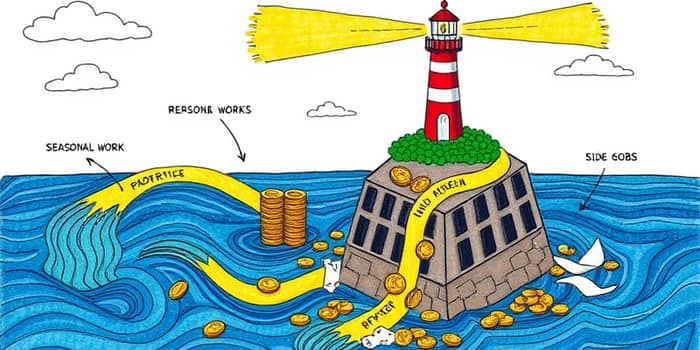
Living on variable earnings can feel like navigating a stormy sea without a compass. One month’s high tide delivers plentiful cash, the next month the waves recede and essentials loom large. Yet with deliberate planning and resilient strategies, anyone can turn uncertainty into confidence.
In this guide, we’ll explore techniques to create steady monthly budget despite fluctuations, build robust buffers, and harness tools that transform irregular income into predictable, manageable finances.
Freelancers, entrepreneurs, seasonal workers and students reliant on grants all share a common hurdle: no guaranteed paycheck. This unpredictability can trigger stress and hamper long-term goals like homeownership or retirement.
By acknowledging the rollercoaster nature of your cashflow, you prepare mentally to craft solutions. Treat your irregular payments as parts of one continuous income stream—treating each month like a paycheck—and resist the urge to inflate spending in high-income periods.
Several evidence-based methods can serve as the cornerstone of your plan. Each approach aims to smooth peaks and valleys for consistent financial well-being:
Choosing the right strategy depends on your comfort with risk, length of income history, and spending discipline. Seeking simplicity and clarity often yields the best long-term results, especially for those new to self-managed cashflow.
Implementing any method follows a clear sequence. These steps help you build long-term financial resilience and maintain discipline.
For example, if your baseline is $3,000 but you earn $4,500 one month, deposit the extra $1,500 into your buffer. If you earn only $2,200 the next, your buffer covers the $800 gap—keeping bills paid without stress.
An emergency savings buffer prevents financial crises during lean periods. Aim for at least 3–6 months of essential expenses—up to 12 months if you face dramatic income swings.
Start small: even $50 or $100 per paycheck accumulates over time. Label this fund prominently—digitally or physically—to discourage casual spending. Witnessing its growth can also fuel your motivation.
When a high month arrives, consider allocating a portion of surplus earnings to tax obligations, retirement accounts, or long-term goals—rather than immediately expanding your lifestyle.
Modern financial tools can handle the heavy lifting for you. By combining multiple accounts with automated transfers, you reduce manual effort and emotional decision-making.
Enable direct deposit or recurring transfers: make savings contributions automatic each time funds clear. This removes temptation and simplifies discipline.
A balanced mindset is the secret ingredient. View your income as one continuous flow rather than isolated windfalls. Resist the urge to inflate spending during peaks; instead, plan deliberate lifestyle upgrades when your buffer exceeds goals.
Common pitfalls include overspending in high months, ignoring upcoming irregular bills, and treating dual budgets as free rein. Combat these by reviewing your plan monthly and adjusting your baseline if your income trend shifts drastically.
When shortfalls loom, tap into your buffer or pursue small side gigs—delivery services, tutoring, or selling unused items. Every extra dollar helps bridge gaps without derailing your budget.
Budgeting with irregular income demands foresight, discipline, and compassion for yourself. By establishing a conservative income baseline, building robust savings, and leveraging automation, you can navigate lean times with ease and flourish in prosperous months.
Embrace these strategies, refine them to suit your rhythm, and watch as financial stress transforms into confidence. In the ebb and flow of variable earnings, you have the power to craft a budget that doesn’t just survive—it thrives.
References