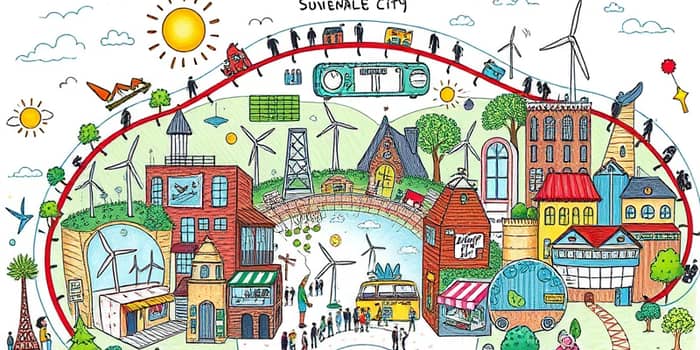
In a world grappling with resource scarcity and escalating environmental pressures, the circular economy offers a beacon of hope. By shifting away from the traditional linear "take, make, dispose" model, businesses and governments can unlock new pathways to sustainable prosperity. Decouple economic growth from finite raw materials, reduce waste, and build resilient systems that regenerate natural capital.
Circular economy finance serves as the financial engine driving the shift toward restorative and regenerative economic systems. Through targeted investments, innovative instruments, and robust frameworks, this emerging field mobilizes capital to support projects, companies, and business models that embrace closed-loop design, resource recovery, and service-based offerings.
Circular economy finance has already demonstrated its transformative potential. According to Accenture, it could generate $4.5 trillion in additional economic output by 2030. Between 2019 and 2023, more than $350 billion was mobilized globally by financial institutions toward circular initiatives, illustrating a powerful market signal.
Investing in circular solutions helps institutions diversify portfolios, reduce exposure to raw material price volatility, and achieve superior risk-adjusted returns. These investments yield not only financial benefits but also deliver meaningful social and environmental impacts, from job creation to ecosystem restoration.
The Circular Economy Finance Guidelines identify seven core business models that underpin the transition. Each model plays a unique role in maintaining the value of materials and minimizing waste:
To ensure transparency and integrity, Dutch banks and stakeholders developed voluntary Circular Economy Finance Guidelines in 2018. These guidelines articulate processes for debt and equity instruments that support circular investments while mitigating risks such as greenwashing and misallocation of capital.
At the core lie four essential components that guide issuers and investors:
Financial institutions must build deep circular economy insights to identify risks and opportunities. By applying the 9-R framework—from refuse and rethink to recover—banks and asset managers can guide clients through tailored strategies that maximize material efficiency and economic returns.
Key steps include:
The automotive sector illustrates the transformative power of service-oriented and sharing models. By moving from individual vehicle ownership to mobility-as-a-service, companies can drastically reduce raw material use, lower carbon emissions, and optimize fleet utilization.
Similarly, consumer electronics manufacturers are embracing lifetime extension through buy-back programs, refurbishment centers, and certified repair networks. These initiatives not only keep products in use longer but also create local jobs and foster community engagement.
Additional practice areas gaining traction include:
Designing out waste at the earliest stages can influence up to 80% of a product’s environmental footprint. Closed-loop systems that recycle byproducts into new inputs minimize pollution and conserve resources. Shorter, tighter loops yield the greatest cost and carbon savings by reducing transport and energy needs.
Circular finance complements global sustainability goals by contributing to biodiversity protection, net-zero ambitions under the Paris Agreement, and the United Nations Sustainable Development Goals. It also fosters social equity by creating green jobs and empowering local communities.
Circular economy finance is more than a niche strategy—it is an essential component of sustainable finance and a catalyst for systemic change. By channeling capital toward circular business models, financiers not only safeguard investments but also drive innovation, resilience, and environmental stewardship.
As we face mounting ecological challenges, the transition to a circular economy offers a transformative blueprint. Stakeholders across sectors must collaborate to refine frameworks, share knowledge, and scale proven solutions. In doing so, we can unlock trillions in economic value, regenerate natural systems, and secure a prosperous future for generations to come.
References