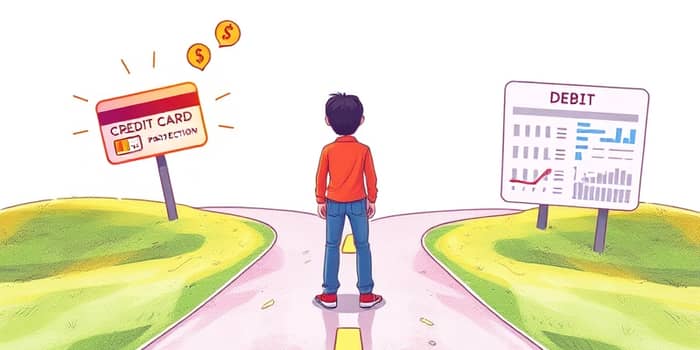
In the world of personal finance, your choice between a credit card and a debit card can shape your financial future. This decision influences everything from your credit score to daily budgeting habits.
Understanding the core differences is crucial for making informed choices that align with your goals. We will explore every aspect in detail to empower you.
By the end of this article, you will have the tools to master your spending strategies and achieve greater financial health.
Credit cards and debit cards may look similar, but they operate on fundamentally different principles. Knowing how they work is the first step to using them wisely.
A credit card allows you to borrow money up to a limit set by the issuer. You receive a monthly statement and can choose to pay in full or carry a balance.
Carrying a balance triggers interest, commonly around 15–25% APR in 2026. Responsible use helps build credit history and score over time.
In contrast, a debit card uses your own funds directly from your bank account. Transactions deduct immediately or within a couple of days.
This means no interest unless you use overdraft, but it does not help improve your credit profile at all.
Each card type comes with its own set of benefits and drawbacks. Evaluating these can guide your decision-making process effectively.
Credit cards offer rewards like points and cashback, often up to 5% back in bonus categories. This can lead to significant savings over time.
They also provide purchase protections, such as extended warranties and travel benefits. These features add value to your purchases.
Fraud protection is robust, with typically zero liability for unauthorized transactions. Disputes do not freeze your own cash while resolved.
However, high interest rates, often 15–25% APR, can lead to debt if not managed carefully. This is a major risk for overspenders.
Debit cards, on the other hand, prevent debt by using only your available funds. This promotes responsible spending habits naturally.
They offer budgeting control through real-time deductions, making it easier to track expenses. However, they lack rewards and do not build credit.
Understanding the financial implications is essential for smart spending decisions. Here are typical ranges to consider.
Credit card costs include APR on purchases around 15–30%, with many above 20% APR. Annual fees vary widely based on card tier.
Debit cards usually have no interest, but overdraft fees can be around $35 per incident. ATM fees may apply out-of-network.
From a business side, the choice between cards affects costs significantly. Debit cards are often cheaper for merchants due to lower fees.
Debit card fees can be as low as $0.07 per transaction, while credit cards cost around 2.3% + $0.10. This influences merchant preferences.
For example, signature debit routes over credit networks and is more expensive, whereas PIN debit is cheaper for in-person transactions.
Protecting your money is paramount in today's digital landscape. Credit cards offer strong fraud protection measures that safeguard your finances.
They typically have zero liability policies, meaning you are not responsible for unauthorized charges. Disputes are handled without affecting your cash.
Debit cards have legal limits, such as $50 liability if reported quickly in the US, but your funds may be unavailable during investigations. This can cause inconvenience.
In the UK, credit cards benefit from Section 75 protection, adding an extra layer of security for purchases over £100.
To make the most of your cards, implement these actionable strategies. They can help you balance benefits and risks effectively.
By adopting these habits, you can enhance your financial resilience and make smarter choices daily.
Choosing between credit and debit cards isn't about one being superior. It's about aligning with your unique financial goals and lifestyle.
Credit cards can be powerful tools for building credit and earning rewards, but they demand discipline to avoid debt.
Debit cards offer simplicity and control, helping you stay within budget without the risk of accumulating interest.
This ultimate showdown has revealed the key differences to guide your decisions. Start today by assessing your needs and taking proactive steps.
Embrace the knowledge to transform your spending habits and achieve greater financial well-being. Your journey to mastery begins now.
References