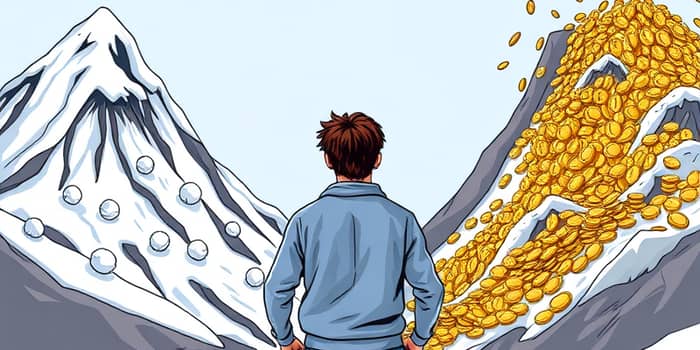
For many, living under the weight of multiple debts can feel like carrying a mountain on your shoulders. Each minimum payment you make barely dents the total, leaving you wondering if freedom is ever within reach. Yet with structured repayment plans, you can chart a clear path to a debt-free life. Two of the most acclaimed strategies, the debt snowball and debt avalanche methods, offer distinct routes toward the same destination: financial liberation.
Choosing a repayment approach is not just about numbers; it is about mindset. When you tailor a method that resonates with your personality, you can regain control over your finances and transform anxiety into action. This sense of agency is the catalyst for lasting change, turning a daunting task into a manageable journey.
As you progress, each cleared balance or each dollar saved builds confidence. You begin to feel a wave of relief that propels you forward, motivating you to stick with your plan even when challenges arise. Over time, what once felt overwhelming becomes a series of achievable milestones.
The debt snowball method focuses on paying off debts in order of balance size, from smallest to largest. By ignoring interest rates and targeting your smallest debt first, you gain a psychological edge. This approach helps you order debts for maximum impact on your morale, as each payoff becomes a celebrated victory.
In contrast, the debt avalanche method attacks your debts by interest rate, from highest to lowest. This strategy minimizes the cost of interest over time, making it the most mathematically efficient path. By applying extra funds to the top-rate balances, you can roll freed-up payments forward and steadily lower the total principal you owe.
While both methods share the same foundation—making minimum payments on all debts and directing any extra funds to a single target—they differ in their underlying philosophy. Snowball emphasizes motivation through early wins, whereas avalanche prioritizes long-term savings and efficiency.
Here is a side-by-side comparison to help you weigh the trade-offs:
Imagine you have three credit card balances: $1,200 at 18%, $4,500 at 15%, and $7,800 at 22%. You can afford an extra $300 per month above minimums. Applying the snowball method, you tackle the $1,200 balance first, then roll that payment into the next smallest debt, and so on. In this scenario, you become debt-free in nearly 25 months and save over $2,200 in interest compared to making only minimum payments.
If you instead choose the avalanche approach, you would direct extra payments to the 22% account, then to 18%, then 15%. This route shortens your payoff timeline to around 22 months and boosts your interest savings closer to $3,000. The exact figures depend on balances and rates, yet both methods triumph over unstructured payment schedules.
Every strategy has its strengths and trade-offs. Consider these when choosing the best fit for your personality and goals.
Now that you understand the mechanics, these practical steps will help turn theory into reality:
First, list every single debt with balances, interest rates, and minimum payments. Use a spreadsheet or a dedicated app to keep data organized and up to date. Then, choose your method and set a realistic monthly budget that frees up extra funds. Automate payments whenever possible to avoid missed deadlines and late fees.
Next, create a visual tracker—whether a chart on your fridge or a digital dashboard—to mark each debt you pay off. As each account closes, redirect that payment amount to the next target. Regularly review your progress, adjust if needed, and don’t hesitate to increase your extra payment amount when your income grows or expenses shrink.
Finally, recognize the emotional journey. Celebrate small successes with low-cost rewards, share your wins with supportive friends or family, and remind yourself why you started. Overcoming debt is not just a numerical victory—it is a personal transformation that strengthens your financial resilience.
By committing to a structured repayment plan and embracing both the psychological and mathematical advantages it offers, you can break free from the grip of debt. Whether you choose the motivating power of the snowball or the efficient thrust of the avalanche, every payment brings you closer to a life defined by opportunities, not obligations.
References