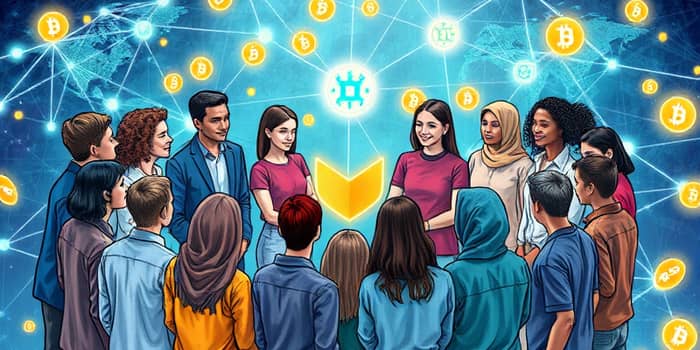
In a world hungry for transparent, inclusive financial models, decentralized investment funds are emerging as a revolutionary force. Built on the foundations of blockchain technology, these funds allow communities to direct capital through collective decision-making. By leveraging DAOs, token holders are no longer passive observers; they become active stewards of their financial destiny.
Once the domain of centralized institutions, fund management is being reimagined through a collective lens. Instead of relying on a handful of licensed managers, everyday participants contribute insights, vote on strategies, and directly influence performance. This shift fosters aligned incentives between investors and decision-makers while mitigating single points of failure.
At its core, Decentralized Finance (DeFi) provides traditional services—lending, borrowing, trading, insurance, and derivatives—powered by open-source, transparent blockchain-based financial ecosystem. In contrast to intermediated TradFi systems where banks or brokers manage assets, DeFi protocols operate through eliminating intermediaries like banks or brokers via smart contracts hosted on permissionless layer-1 platforms.
This sector has blossomed into a trillion-dollar global financial powerhouse that champions financial inclusion on a global scale. Without the barriers of geographic boundaries or business hours, anyone with an internet connection can access these services around the clock. Users maintain self-custody through private digital keys, granting them unprecedented control over assets.
Unlike TradFi counterparts, DeFi services run uninterrupted, offering users continuous market access without downtime. Whether depositing stablecoins into a lending pool or swapping tokens in a liquidity pool, participants interact with protocols that prioritize transparency and modularity, paving the way for innovative financial primitives.
Governance in decentralized funds is orchestrated through Decentralized Autonomous Organizations (DAOs). Token holders propose, debate, and vote on proposals such as treasury allocations, protocol upgrades, and yield strategies. This token-based voting and decentralized governance ensures that decision-making is both transparent and participatory.
Underpinning each decision are smart contracts that execute outcomes automatically, fostering programmable, automated smart contract protocols. While this model empowers users, it also introduces challenges such as voter apathy and token concentration, where a small minority can sway major decisions if turnout is low.
Incentive mechanisms often include token rewards for participation and staking, promoting engagement and aligning long-term community goals. Yet, governance forums can become echo chambers dominated by wealthier participants, underscoring the need for inclusive governance design that encourages broad participation.
To appreciate the transformative potential of decentralized funds, it helps to contrast them with conventional investment vehicles.
Key metrics such as Total Value Locked (TVL) and daily trading volumes are publicly visible on-chain, allowing investors to monitor performance in real time. Unlike traditional funds, where data is released quarterly or annually, decentralized funds empower stakeholders with real-time, end-to-end operational transparency.
By distributing decision rights to token holders worldwide, these models dismantle legacy hierarchies and unlock novel efficiencies. Consider these advantages:
However, the decentralized model is not immune to failure. Participants must navigate several hurdles:
Several platforms exemplify the power and diversity of decentralized funds:
Data highlights that DAOs managing over $10 billion in assets demonstrate both the scale and the risks involved. In some cases, proposals for aggressive leverage or novel token launches have led to significant gains, while others faltered under exploit attempts. Ongoing experimentation reflects the dynamic nature of this sector.
The future of decentralized investment funds is intertwined with the broader trajectory of DeFi. As regulators move to clarify legal frameworks, hybrid models blending TradFi stability with DeFi innovation may emerge. Investors should adopt rigorous due diligence practices on smart contracts, assess tokenomics, and participate actively in governance to safeguard their capital.
By embracing decentralized funds, individuals can enjoy unprecedented financial autonomy and potential returns, while contributing to a system that prioritizes community over corporations. As this space matures, those who combine technical understanding with strategic foresight will lead the next wave of financial innovation.
Ultimately, success in decentralized investing hinges on community resilience, adaptability, and a shared commitment to security and transparency. As these funds grow more sophisticated, they may incorporate automated insurance layers, cross-chain compatibility, and integrated compliance tools to bridge gaps with traditional markets.
References