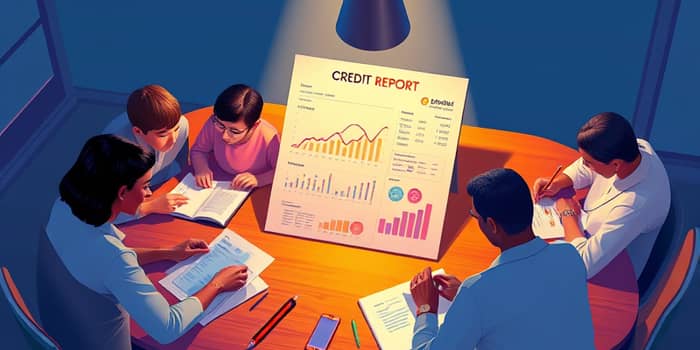
Your credit report can feel overwhelming, but it is simply a snapshot of your financial history that lenders use to predict future borrowing behavior. By understanding its components and learning how scores are derived, you can gain confidence, catch errors, and improve your credit health.
A credit report is a detailed record maintained by major bureaus—Equifax, Experian, and TransUnion—documenting your credit accounts, payment history, and public records. It acts like a report card, reflecting how reliably you meet your debt obligations.
Lenders, landlords, and even insurers often review this document to assess risk. A well-managed report can unlock lower interest rates, better loan terms, and favorable rental agreements. Conversely, inaccuracies or negative marks can lead to credit denials or higher costs.
Every credit report typically contains several key areas that together form a comprehensive financial profile. Familiarize yourself with each to spot mistakes and understand what influences your credit score.
Negatives like charged-off accounts or serious delinquencies can remain for up to seven years, while tax liens may persist indefinitely until resolved.
Your credit report feeds into scoring models that assign a three-digit number, usually between 300 and 850. Two dominant models are FICO and VantageScore, each using different weightings to evaluate risk.
FICO scores are used by over 90% of top lenders. They break down factors as:
VantageScore emphasizes recent behavior more heavily, with payment history at 40% and credit type and age at 21%. It also ignores small paid collections under $250 and supports trended data for more nuanced insights.
Understanding these percentages empowers you to focus efforts where they matter most. Maintaining on-time payments and low balances and choosing accounts responsibly can steadily boost your rating.
Even minor mistakes can drag down your score or cause misinterpretation. Regularly review your report for:
If you discover discrepancies, file disputes promptly with each bureau. Provide documentation—bank statements or payment confirmations—and follow up until corrections appear. This process can be time-consuming, but error resolution and dispute letters will safeguard your creditworthiness in the long term.
Building and maintaining a strong credit profile involves both good habits and tactical moves. Try these proven methods to achieve consistent progress:
Over time, these practices will reflect positively across your report and score models. Remember, building credit is a marathon, not a sprint. Celebrate small wins—like a dropped utilization rate or a cleared error—and stay focused on long-term consistency.
By decoding your credit report and aligning your actions with core scoring principles, you take control of your financial narrative. Armed with knowledge and reinforced by disciplined habits, improving your credit health becomes an achievable, empowering journey.
References