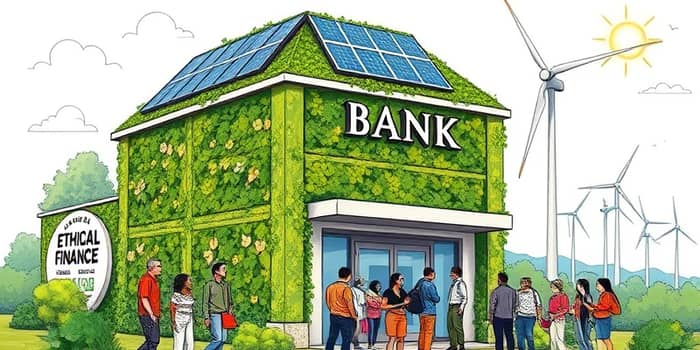
In a rapidly changing world, your financial choices can have an impact far beyond your own portfolio. Ethical banking offers an opportunity to align personal values with financial decisions, supporting environmental sustainability and social justice.
By selecting institutions that prioritize purpose alongside profit, you become part of a transformative movement toward a fairer, greener economy. This article explores core principles, global frameworks, practical guidance, and inspiring examples to help you make informed choices.
Ethical banks distinguish themselves by embedding responsibility into every aspect of their operations. They aim to balance profit with people and planet, often referred to as the triple bottom line framework.
Key principles include alignment with global goals, rigorous impact assessment, stakeholder engagement, and open reporting. These foundations ensure activities support long-term well-being rather than short-term gain.
Traditional banks prioritize shareholder returns and often engage in speculative investments, whereas ethical banks carefully screen and direct funds toward industries that generate positive change.
International standards and networks guide ethical banking toward consistent practice and accountability. The Principles for Responsible Banking (PRB) launched by the United Nations have over sixty signatories worldwide, committing members to address climate, nature, human rights, and inclusive economies.
ESG criteria (Environmental, Social, Governance) further integrate sustainability into financial decision-making, with institutions setting net-zero and carbon-tracking targets.
The Global Alliance for Banking on Values (GABV) unites purpose-driven banks that demonstrate the viability of a resilient community-centered financial model. Through collaboration and peer learning, members strengthen impact and transparency.
Selecting an institution aligned with your values requires careful evaluation of policies, performance, and community involvement. Look for clear evidence of impact and ethical commitments.
Triodos Bank in Europe finances only projects with cultural, social, or environmental benefits, supporting renewable energy and social enterprises since its founding. Its commitment to nature-positive financing has fueled dozens of wind and solar farms.
In the United States, Beneficial State Bank directs over 75% of its lending toward social impact sectors, certified by independent auditors for its triple bottom line approach. Clients appreciate its open policy on fees and investments.
These examples demonstrate how financial institutions can thrive while driving positive change, attracting customers who seek purpose beyond profit.
Defining ethical banking remains flexible, allowing variation in standards and risk profiles. Rejecting clients from high-profit harmful industries can pose financial trade-offs, and smaller banks may face capacity constraints.
Yet growth is propelled by rising consumer awareness, demand for transparency after financial crises, and unmet needs in underserved communities. Innovative products like energy-linked mortgages and green deposit accounts continue to expand ethical banking’s appeal.
Ethical banking represents more than a niche; it is a dynamic response to global challenges, offering resilience and purpose. By directing your deposits wisely, you can contribute to climate action, social equity, and robust local economies.
As you explore institutions, remember that each decision shapes a collective future. Embrace the power of finance as a tool for good and partner with banks that reflect your aspirations for a better world.
References