The global drive for inclusive finance has never been more urgent. Today, 1.3 billion adults remain excluded from formal banking, their potential untapped and voices unheard. Yet innovation offers a transformative path forward.
Despite historic gains—account ownership rising to 79% of adults in 2025—over half of the unbanked population lives in just eight nations. Women account for 55% of those without an account, the poorest 40% of households make up 52%, and those with primary education or less represent 62%. In Sub-Saharan Africa, only 58% of adults have a bank account, though this marks a notable rise from 49% in 2021.
While South Asia approaches 80% account ownership and India leads at 90%, stark gaps persist. The United States, with a 96% fully banked rate, still counts 22% of people as unbanked or underbanked. Across low- and middle-income economies, 44% rely on cash for utility payments, and 50% of adults lack a credit card. These figures underscore the urgent need for targeted solutions that address both access and usage.
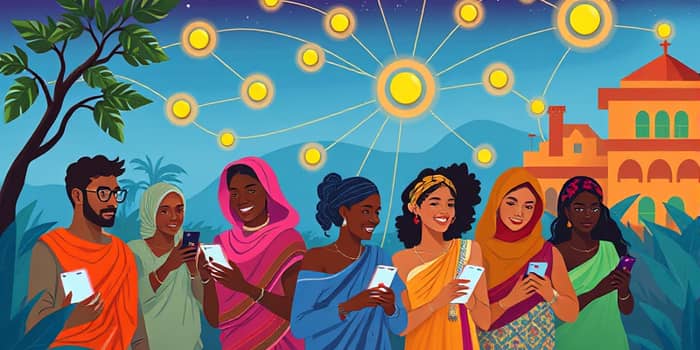
Technology is rewriting the rules of engagement. In many regions, mobile money and digital payments have leapfrogged traditional banks, reaching remote communities where infrastructure is scarce. Peer-to-peer payment volumes in the U.S. are surging, while real-time payment rails like RTP and FedNow have seen transaction values grow by 405% in a single year.
Simultaneously, artificial intelligence is powering a new generation of credit scoring and risk management tools. These systems draw on diverse data sources—social transactions, mobile usage, and alternative identifiers—to create fairer, more inclusive underwriting models. With built-in privacy safeguards and bias controls, AI-driven lending for inclusive underwriting is becoming a reality, unlocking credit for millions who were previously invisible to financial institutions.
No two regions are alike, and tailored strategies are vital. In Sub-Saharan Africa, mobile money providers have reached 184 million users, creating an ecosystem for savings, insurance, and microloans. Yet 57% of adults remain unbanked, signaling enormous potential for further growth.
South Asia, led by India’s 90% account coverage, has embraced digital Aadhaar-linked banking, driving down costs and fraud. In APAC, 820 million adults still lack accounts, with Indonesia’s 48% unbanked rate shaped by geographic dispersion and limited infrastructure. The Middle East and North Africa, meanwhile, have seen account ownership climb to 53%, but formal savings remain low at 17%.
As donor funding shifts, the ecosystem is maturing toward sustainable, market-driven models. Investors embed financial inclusion into portfolios, and mission-driven startups and policy hybrids emerge from universities and corporate R&D labs. AI experimentation, once costly, now rolls out quickly thanks to open frameworks and shared data platforms.
With 78% of consumers using fintech apps as co-pilots and 81% seeking financial education, products that integrate guidance, nudges, and incentives will win trust and drive healthy behaviors. The future belongs to solutions that balance scalability with empathy, ensuring no one is left behind.
Even with progress, persistent exclusions despite remarkable progress continue. Women, the poorest households, the unemployed, and those with minimal education are still disproportionately excluded. Cash remains dominant for almost half of all utility payments, reinforcing informal systems that limit economic mobility.
Financial inclusion is more than a metric—it represents hope, dignity, and opportunity. By harnessing technology thoughtfully and focusing on real-world barriers, we can create a system where every individual, regardless of gender, geography, or income, can participate fully in the global economy.
Stakeholders—from fintech pioneers to policymakers—must collaborate to design human-centered, resilient financial systems. Investments in digital infrastructure, education initiatives, and robust consumer safeguards will ensure that the gains of today endure for generations. Together, we can light the path toward a world where financial access empowers every person to achieve their dreams.
References