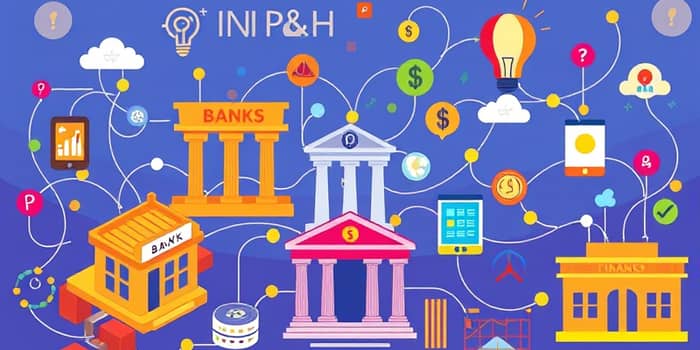
In today’s rapidly evolving financial landscape, the power of partnership is becoming clearer than ever. Instead of viewing institutions as rivals, stakeholders from banks to fintech startups are realizing that true innovation arises from shared infrastructure and mutual trust.
By fostering synergies rather than rivalries, financial services can become more accessible, efficient, and inclusive for all.
At the heart of a thriving fintech ecosystem lies an understanding that no single entity can address every customer need alone. Collaboration empowers each participant to focus on strengths while relying on partners for complementary capabilities.
This approach is driven by several guiding principles:
Four main actors form the backbone of collaborative fintech networks:
First, traditional banks and financial institutions hold the core depository accounts, payment rails, and regulatory compliance expertise critical to a secure system. Second, nimble fintech companies leverage APIs to build consumer-facing features—such as budgeting tools, investment platforms, or peer-to-peer payment services—without duplicating underlying account management.
Data networks, whether operated by fintech aggregators or open banking consortia, act as neutral intermediaries. They facilitate secure, permissioned access to transaction data across thousands of institutions, eliminating the need for each app to build dozens of custom connections.
Finally, consumers drive the demand for integrated experiences. Their appetite for instant, personalized financial solutions pressures all parties to collaborate. As a result, services like real-time payments or automated wealth management are no longer luxuries but expectations.
When businesses join forces, market opportunity multiplies. The global fintech industry is projected to grow from approximately $395 billion in 2025 to over $1.76 trillion by 2034, reflecting an annual growth rate exceeding 18%.
This explosive expansion is not fueled by isolated ventures but by integrated solutions that span multiple sectors.
Looking ahead, several trends underscore the shift from siloed offerings to interconnected platforms:
Collaboration is not just a business strategy—it is a pathway to socioeconomic impact. In regions where traditional banking penetration remains low, partnerships between microfinance institutions, mobile network operators, and fintech startups are transforming livelihoods.
By combining localized knowledge with digital platforms, these alliances deliver credit, savings, and insurance to communities previously excluded from formal finance. The result is a virtuous cycle: enhanced financial health leads to greater entrepreneurial activity, job creation, and local investment.
Of course, working together at scale is not without hurdles. Data privacy concerns, differing compliance regimes, and legacy technology constraints can slow progress. Yet, by pooling resources, organizations can share the burden of compliance, co-develop modern cloud-native cores, and establish mutual governance frameworks.
When a multinational bank partners with a nimble API-first fintech, it can adopt innovative user experiences without sacrificing regulatory rigor. Conversely, startups gain the trust and reach that only established institutions can provide.
FinTech ecosystems shine brightest when participants view each other not as adversaries but as co-creators of value. By leveraging shared platforms and trust-based alliances, banks, fintechs, data networks, and consumers can unlock unprecedented scale and impact.
The future of finance belongs to those willing to embrace collaboration over competition, building an inclusive, resilient system that serves everyone.
References