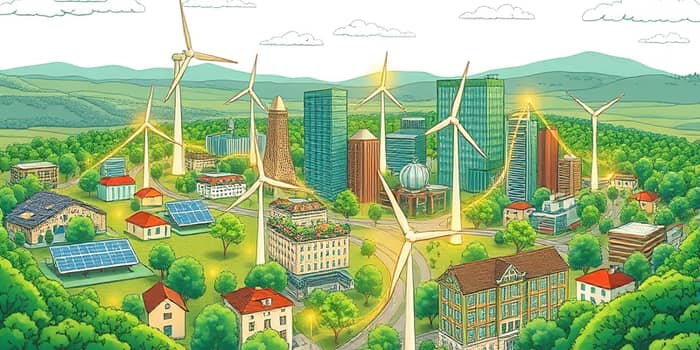
In a world grappling with climate change and environmental degradation, green finance emerges as a beacon of hope, reshaping economies towards sustainability.
It represents a transformative approach to investing, channeling capital toward environmentally beneficial projects that drive both ecological and economic resilience.
This isn't just about money; it's about building a future where growth and green priorities align seamlessly.
Green finance encompasses financial activities designed to achieve better environmental outcomes, from renewable energy to biodiversity conservation.
It includes a wide range of instruments and mechanisms that prioritize sustainability in economic decisions.
Key elements include green loans, bonds, and investments that fund projects like solar farms or energy-efficient retrofits.
Beyond products, it involves systemic changes in banking, insurance, and investment flows to support sustainable development goals.
Green finance is broader than climate finance, covering all environmental objectives, while sustainable finance integrates ESG factors for long-term impact.
Green finance is critical for meeting global sustainability targets, such as the UN's Sustainable Development Goals.
It fuels the net-zero transition by scaling up investments in low-carbon technologies and infrastructure.
The economic co-benefits are substantial, including job creation, innovation, and enhanced competitiveness.
For instance, the UK requires around £50 billion annually in low-carbon investment to achieve net zero.
This underscores the immense capital needed and the role of green finance in mobilizing it.
Green finance relies on specialized instruments that allocate funds to eco-friendly projects.
Green loans are earmarked for specific environmental benefits, often with incentive structures tied to performance.
They make sustainable upgrades accessible to businesses and municipalities of all sizes.
Green bonds, in particular, offer transparency and impact reporting, attracting mainstream investors.
The global green bond market could reach $2.36 trillion by 2023, highlighting its dominance.
These instruments are powering a sustainable economic future by aligning financial returns with planetary health.
The green finance market is expanding rapidly, driven by regulatory support and investor demand.
In 2024, it's estimated at $4,077.39 billion, with projections to exceed $10 trillion by 2035.
This growth reflects a shift towards responsible investing as a mainstream practice.
North America leads in green bond issuance, while Asia-Pacific sees rapid growth in ESG funds.
Major financial institutions, such as BlackRock and HSBC, are key players in this space.
They are integrating ESG criteria into credit risk assessment, making sustainability a core part of finance.
To harness green finance, individuals and businesses must understand its mechanisms and opportunities.
Start by exploring green investment options, such as green bonds or ESG-focused funds.
Engage with financial advisors to align portfolios with sustainability goals.
Future trends include the rise of sustainability-linked instruments and enhanced impact reporting.
Green finance is not just a trend; it's a critical pathway to decarbonizing economies and fostering resilience.
By investing in green projects, we can create a virtuous cycle of economic growth and environmental stewardship.
Embrace this revolution to build a legacy of sustainability for generations to come.
References