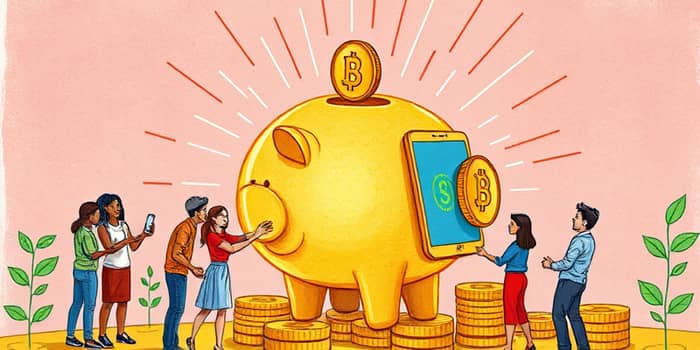
In a world where traditional savings often feel out of reach, small deposits add up to create remarkable change. Micro-savings offers a powerful pathway for individuals of all incomes to build security and opportunity one incremental step at a time.
Micro-savings refers to financial products designed for low-income individuals, families, or those who prefer to save in very small increments. These accounts usually feature no minimum deposit requirement, low or zero fees, flexible withdrawal options, and the ability to earn interest.
Formats range from traditional rotating savings groups (ROSCAs) to cutting-edge mobile apps that automate transfers from daily transactions. By eliminating barriers like credit checks and high minimum balances, micro-savings empowers savers to take consistent, manageable steps toward financial resilience.
When used effectively, micro-savings can shape long-term financial behaviors, improve resilience to shocks, and cultivate confidence. Key advantages include:
Importantly, micro-savings programs often complement existing informal savings, boosting overall household wealth without displacing traditional methods.
Across continents, micro-savings initiatives have delivered tangible improvements in well-being. Consider the following examples:
Start2Save by Opportunity Fund (US): A program for very low-income savers that combined individual deposits of $51,940 with matched funds of $90,958, leading 143 participants to amass $142,898. Twenty-five percent of graduates used their savings for urgent emergencies.
LAPO Microfinance ‘‘My Pikin & I’’ (Nigeria): A child-focused account that integrated micro-insurance coverage and SMS reminders, enrolling 125,000+ savers and extending insurance to 7,400 families to protect against accidents.
Agro Supply Mobile Savings (Uganda): Empowered 25,000+ farmers to save towards farm inputs, delivering over 100,000 kilograms of seeds and fertilizers and boosting local food security.
BRI Microbanking (Indonesia): With 179 million accounts, micro-savings represents 32% of total deposits for this century-old institution, mobilizing the equivalent of $75 billion to date.
Robust research confirms the impact of micro-savings on household financial health. Randomized trials and longitudinal studies show significant increases in savings rates, asset accumulation, and service uptake.
Qualitative data capture enhanced optimism, improved financial literacy, and greater willingness to engage with formal services among participants.
Successful initiatives often rely on human-centered design, responsive technology, and community-driven models.
By weaving in incentives like matching contributions or bundled insurance, programs maintain engagement and foster deeper commitment.
Despite clear benefits, micro-savings faces hurdles. Some participants spend down balances quickly after graduation, and the poorest may still lack access to digital services. Designing for consistent incremental saving behavior requires ongoing iteration and localized solutions.
Future directions include expanding into agricultural value chains, tailoring products for women entrepreneurs, and leveraging data analytics to tailor nudges in real time.
Embarking on your micro-savings journey can begin with simple, practical steps:
By committing to small, regular contributions, you harness the power of compounding and build a safety net that grows steadily over time.
Micro-savings is more than a financial tool; it is a movement. By encouraging seamless digital and physical integration and inclusivity, it empowers millions to write their own success stories. Start today, and witness how every small contribution paves the way to a brighter, more secure future.
References