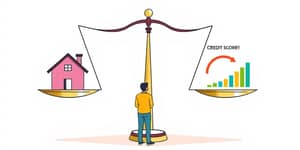
When seeking financing, whether for a dream home or a business venture, understanding how to leverage your assets is crucial. Real estate stands out as one of the most reliable and versatile forms of collateral, offering borrowers a pathway to secure favorable loan terms.
This article will guide you through the essentials, from core concepts to practical strategies, empowering you to make informed decisions. By exploring your options, you can unlock the full potential of your property.
At its core, collateral is an asset pledged to a lender to reduce risk and ensure repayment. This security allows borrowers to access larger sums and better interest rates, making it a cornerstone of modern finance.
Real estate, in particular, is prized for its tangible nature and stable value, but navigating its use requires knowledge. Let's delve into the details to help you explore your options effectively.
Collateral serves as a safety net for lenders, reducing their risk in case of default. If a borrower fails to repay, the lender can seize and sell the asset to recover losses.
This arrangement benefits both parties by enabling more accessible and affordable borrowing. Common types of collateral include:
Secured loans, backed by collateral, often come with lower interest rates compared to unsecured loans. For instance, mortgages typically have better terms than credit cards, which rely solely on creditworthiness.
A key metric is the Loan-to-Value (LTV) ratio, which measures the loan amount against the asset's value. Lenders usually cap LTV at 70–80% for conservative lending, ensuring a buffer against market fluctuations.
Real estate is a preferred choice for lenders due to several inherent advantages. Its physical nature allows for easy inspection and appraisal, providing tangible security.
Moreover, well-located properties tend to maintain or increase in value over time, offering relative stability. This makes real estate a low to moderate risk asset for financial institutions.
The legal framework surrounding real estate is well-established, with clear processes for mortgages and foreclosures. Lenders can register liens to secure their interest, simplifying enforcement in defaults.
Real estate is also suitable for large, long-term loans, such as those for home purchases or commercial developments. Key reasons include:
Real estate can be used in various ways to secure financing, each with unique features. Understanding these options helps you choose the best fit for your needs.
Here are some primary structures:
A traditional mortgage involves using the property being purchased as collateral. The lender funds most of the purchase price, and the property is pledged with a lien.
If you default, the lender can foreclose and sell the property to recover the debt. This is common for owner-occupied homes and investment properties.
Key points to consider include down payments, interest rates, and the risk of foreclosure. Fixed rates offer predictability, while variable rates can change with market conditions.
Home equity loans and Home Equity Lines of Credit (HELOCs) allow you to borrow against the equity in your property. This built-up equity serves as collateral for additional funds.
Home equity loans provide a lump sum with fixed rates, ideal for one-time expenses. HELOCs offer revolving credit with variable rates, suited for ongoing needs like renovations.
However, this turns unsecured debt into secured debt against your home. Defaulting can lead to foreclosure, even if your original mortgage is current, due to LTV layering risks.
For business purposes, commercial real estate loans use properties like offices or warehouses as collateral. Lenders evaluate both the property and its income-generating ability.
Due diligence includes reviewing income statements, rent rolls, and tenant leases. These loans often require larger down payments and have more conservative LTVs.
Additional security, such as assignment of rents, can enhance the loan structure by securing cash flow from tenants.
Cross-collateralization involves using the same or multiple properties to secure more than one loan. This can increase borrowing capacity but adds complexity.
For example, a borrower might use Property X for Loan A and both Properties X and Y for Loan B. If one loan defaults, it can affect all involved properties, creating entangled asset risks.
A mortgage note represents the promise to pay and can be used as collateral by investors. In first-lien position, it offers priority in liquidation proceeds.
Assignment of rents gives lenders the right to collect rental income upon default, common in commercial properties. This secures cash flow alongside the physical asset.
Security interests in personal property, like furnishings, can also be pledged, though they carry different risks. Personal guarantees, while not physical collateral, enhance credit by committing personal wealth.
Using real estate as collateral involves legal agreements like liens and mortgages. These documents outline the lender's rights and the borrower's obligations.
Tax implications can vary; for instance, interest on mortgages may be deductible, but foreclosure can trigger tax events. Consulting with professionals is advisable to navigate these aspects.
Key legal points include:
While real estate collateral offers benefits, it comes with risks that must be managed. Defaulting can lead to the loss of your property, regardless of equity built.
Market fluctuations can affect property values, impacting LTV ratios and loan terms. It's essential to assess your financial stability and the property's potential.
Decision factors include:
To mitigate risks, consider maintaining a healthy LTV ratio and having a contingency plan. Diversifying collateral or seeking unsecured loans might be prudent in some cases.
By understanding these elements, you can make empowered choices that align with your goals. Real estate as collateral is a powerful tool for financing, but it requires careful handling to avoid pitfalls.
In conclusion, exploring your options with real estate collateral opens doors to financing opportunities. Whether for personal or business use, leveraging property can provide stability and growth.
Remember to weigh the pros and cons, seek expert advice, and stay informed about market conditions. With the right approach, you can harness the power of real estate to achieve your financial aspirations.
References