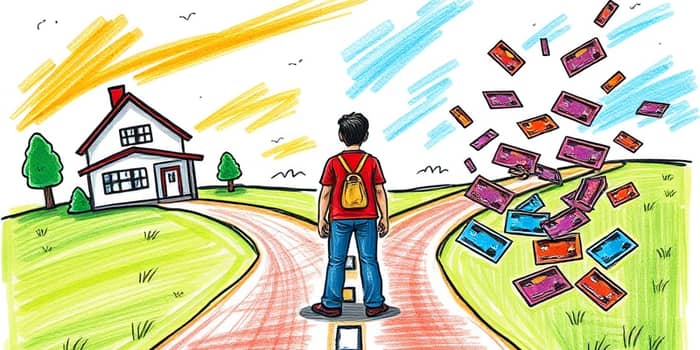
Debt consolidation can be a lifeline for overwhelmed borrowers, offering a way to simplify payments and reduce interest.
It involves combining multiple debts into one new loan, often with better terms.
Secured loans, backed by collateral like your home or car, present a tempting yet risky option for this purpose.
This article explores whether they are a smart tool or a dangerous gamble.
Debt consolidation merges various high-interest debts, such as credit cards, into a single loan.
The goal is to achieve lower interest rates and simplify repayment.
Secured loans require collateral, which the lender can seize if you default.
Common types include home equity loans and auto title loans.
In contrast, unsecured consolidation loans rely on credit scores without collateral.
Consolidating debt can lead to significant financial benefits if done correctly.
It aims to lower overall interest costs and streamline payments.
However, it requires careful planning to avoid pitfalls.
Key caveats include fees and the risk of not changing spending habits.
Without discipline, borrowers may accumulate new debt on top of the consolidation loan.
Secured loans are often used to pay off multiple unsecured debts.
They convert consumer debt into a single loan tied to an asset.
This approach appeals to many due to lower rates and easier approval.
But it introduces unique and severe risks that must be considered.
Defaulting can lead to losing your home or car.
Understanding the advantages and disadvantages is crucial for making an informed decision.
Secured loans offer benefits like lower costs but come with high stakes.
Weighing these factors helps determine if a secured loan is right for you.
Choosing between secured and unsecured options depends on your financial situation.
This comparison highlights key differences to guide your decision.
This table underscores the trade-offs in safety and affordability.
To use secured loans wisely for debt consolidation, follow these steps.
Start by assessing your financial health and long-term goals.
Consider if the benefits outweigh the potential for asset loss.
Debt consolidation should be part of a broader strategy to improve finances.
It requires discipline and a commitment to changing spending habits.
Inspiring stories show that with careful planning, financial freedom is achievable.
Remember, the goal is not just to consolidate debt but to build a secure future.
By understanding the risks and rewards, you can make empowered choices.
Secured loans can be a powerful tool, but they demand respect and caution.
Embrace this journey as a step toward lasting financial well-being.
References