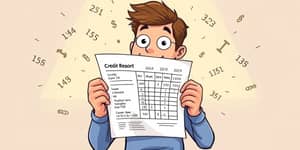
In the third quarter of 2024, a startling 10.75% of credit card customers paid no more than the required monthly payment.
This marks the highest percentage since late 2012, revealing a deepening financial crisis.
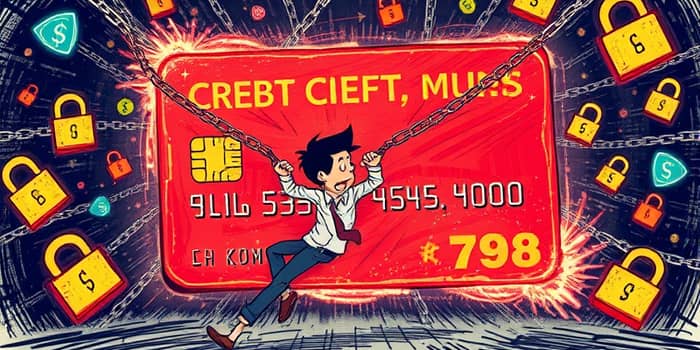
One in ten Americans now finds themselves trapped by minimum payments, unable to escape mounting debt.
Minimum payments are designed so that most of your money goes toward interest, not reducing the principal balance.
For instance, on a $3,000 balance at 18% interest, paying only the minimum takes 11.5 years.
The total interest paid exceeds the original debt, showcasing the insidious nature of this trap.
As balances decrease, minimum payments drop, extending payoff timelines indefinitely.
This compounding effect, driven by sky-high interest rates, can spiral into unmanageable debt.
When consumers can only afford minimum payments, it signals that their finances are tapped out.
This trend serves as a warning for the broader economy, indicating potential stress ahead.
Federal Reserve data shows that rising minimum payments coincide with higher credit card balances and delinquency rates.
FICO scores have dropped, partly due to missed payments and high credit utilization, eroding financial stability.
Credit card companies prominently display minimum payments on bills, exploiting cognitive biases like anchoring.
This causes consumers to believe they shouldn't pay more, even when they have the capacity.
Studies reveal that when minimum payments were less apparent, people increased their payments by 70%.
The illusion of manageability keeps cardholders compliant but financially deteriorating over time.
Defaulting on payments triggers severe repercussions, starting with late fees and missed payment penalties.
Credit score damage ensues, leading to higher interest rates on all future loans and credit lines.
Access to credit becomes restricted, making it nearly impossible to recover or secure housing and vehicles.
In extreme cases, wage garnishment or Social Security seizure might occur, devastating retirement plans.
Living under the weight of minimum payment debt sabotages future stability and dreams.
Difficulty maintaining housing security becomes a grim reality as debt payments consume disposable income.
Saving for retirement becomes nearly impossible, forcing many to work longer or rely on social safety nets.
Many are compelled to make painful tradeoffs between debt payments and basic needs like food and healthcare.
This cycle can last for decades, trapping individuals in a state of financial limbo and stress.
The emotional toll includes anxiety, depression, and strained relationships, affecting overall well-being.
Certain indicators highlight vulnerability to the minimum payment trap, often tied to credit behavior.
Over three-quarters of people with credit scores of 800+ pay off their cards in full monthly.
In contrast, under one-quarter of those with lower scores do the same, revealing a disparity in financial health.
Record-high delinquencies and late payments are red flags that signal impending financial trouble.
Moreover, 42% of borrowers report making tradeoffs between loan payments and basic needs, underscoring a broader crisis.
To avoid or escape this trap, always strive to pay more than the minimum required amount.
Even a small extra payment can significantly reduce the payoff time and total interest costs.
If you have multiple credit cards, prioritize paying extra toward the one with the highest interest rate first.
This strategy, known as the avalanche method, maximizes your impact on reducing overall debt efficiently.
If you find yourself unable to pay more than the minimum, consider freezing your credit card use immediately.
It is better to voluntarily restrict access than face forced restrictions from creditors and collections agencies.
Recognize that minimum payments are not a viable long-term strategy for financial health.
By taking proactive steps and adopting disciplined habits, you can reclaim your financial freedom.
Building an emergency fund and increasing financial literacy are key to preventing future traps.
Remember, breaking free from debt requires commitment, but the rewards of stability and peace are immense.
Your journey to financial wellness starts with understanding the dangers and acting decisively today.
References