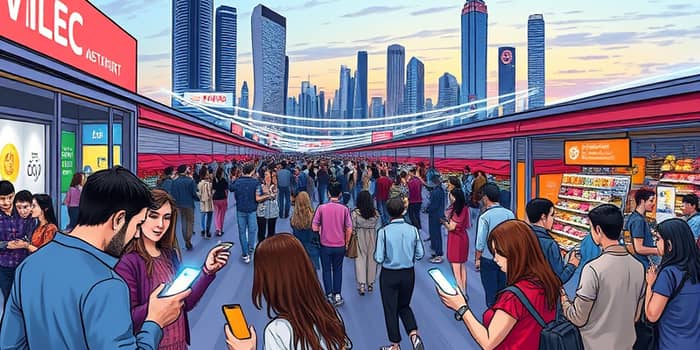
In just a few years, the payment landscape has transformed from swiping plastic cards to tapping devices and scanning codes. As consumers demand speed, security, and seamless experiences, financial institutions, merchants, and developers race to innovate. This article explores the emerging trends, technologies, and challenges shaping the next era of payments.
Real-time payments are redefining how money moves between parties. In the United States, services like FedNow and the RTP network enable immediate settlement of transactions 24/7, meeting the needs of gig workers, insurers, and payroll providers. Mastercard’s Transaction Stream extends these capabilities globally, offering real-time clearing and same-day settlement to merchants and financial institutions.
By 2026, more than 80 countries will operate RTP schemes. This infrastructure shift not only accelerates transactions but also embeds financial services directly into business processes, reducing days-long batch settlements of legacy ACH systems.
Contactless payments reached a staggering $10.4 trillion in 2024 across 456.6 billion transactions. Representing 23% of card spending and 42% of all card transactions globally, they surged from 18% in 2023.
Successful merchants are adopting multi-mode terminals supporting NFC taps, QR codes, and Bluetooth Low Energy. This ensures no lost sales due to incompatible devices, especially in regions where QR code payments dominate.
Digital wallet transactions totaled $10 trillion globally in 2024, and by 2026 they will serve over 5 billion users. Tokenization—replacing PANs with dynamic EMV tokens—has become the standard for secure transactions, reducing fraud and enabling one-click checkout across platforms.
Biometric authentication—fingerprints, facial recognition—integrates with wallets for seamless in-store experiences. Major e-commerce platforms are ending guest checkouts, embracing buy buttons, Apple Pay, and similar solutions to streamline purchases and reduce cart abandonment.
Artificial intelligence is no longer an experiment; it's embedded in payment flows. Machine learning models perform real-time fraud detection and risk scoring, while personalization engines recommend offers based on spending habits. Soon, autonomous agents will complete routine purchases—refilling supplies or paying bills—on behalf of users.
This agentic commerce paradigm stands to reshape consumer interactions: smart assistants will negotiate prices, optimize payment timings for interest benefits, and manage loyalty points without manual input.
Stablecoins, backed by fiat reserves, are gaining regulatory clarity through initiatives like the U.S. GENIUS Act. Visa supports over 130 stablecoin-linked cards across 40+ countries, enabling near-instant cross-border transfers. Consumers will soon transact with verified crypto aliases just as easily as traditional cards.
As centralized banks explore digital currencies (CBDCs), the coexistence of fiat, stablecoins, and emerging tokens will create a truly crypto-agile payment infrastructure that adapts to new algorithms and regulatory standards.
Payments are moving beneath the surface of everyday experiences. From ride-hailing apps to social media platforms, embedded finance allows transactions without leaving the context of an activity. This invisible payments approach boosts conversion rates and customer loyalty.
Interoperability between networks, instant settlement rails, and robust fraud monitoring ensure resilience. In developing markets, digital ID wallets and decentralized aliases expand access for the unbanked, fostering financial inclusion on a global scale.
As the industry evolves, stakeholders must collaborate on standards, share threat intelligence, and invest in scalable infrastructure. Partnerships between banks, fintechs, regulators, and technology providers will determine who leads the next phase.
By 2026, half of global consumer payments will rely solely on card credentials—plastic or tokenized. Cash’s final holdouts, like small micro-transactions, are digitizing through taps and QR codes. Looking toward 2030, payments will be more personalized, predictive, and interoperable than ever.
The journey from magnetic stripes to seamless, invisible transactions is already underway. For merchants and consumers alike, embracing these trends will unlock speed, security, and unprecedented convenience in the digital economy.
References