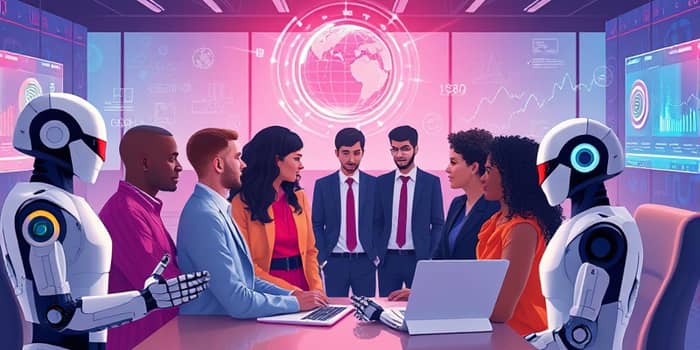
As artificial intelligence and automation accelerate, the nature of work is transforming at an unprecedented pace. Understanding how to navigate this change is essential for individuals, organizations, and societies seeking to harness the potential of emerging technologies while mitigating risks.
By 2030, AI and automation could displace 92 million jobs globally, yet simultaneously create 170 million new roles, yielding a net gain of 78 million jobs. These shifts are most pronounced in clerical work, software development, legal services, and manufacturing. In the United States alone, 93% of jobs—worth $4.5 trillion in wages—face potential impact today, six years ahead of earlier forecasts.
The rate of change is staggering. Employers now expect 34% of all tasks to be fully automated by 2030, up from 42% predicted for 2027, with AI exposure rising nearly 9% per year. Data processing roles see 65% task automability by 2027, while administrative jobs face 46% automation. Even specialized professions like legal services see 44% of tasks handled by AI, and predictive robots threaten 20 million manufacturing roles.
Despite these challenges, automation also unlocks vast potential for wealth creation and human advancement. AI-driven tools free employees from repetitive work, granting more time for creative, strategic, and interpersonal tasks. Companies that master autonomous workflows and continuous optimization report cost reductions of 60–80% in accounts payable and halve supply-chain forecasting errors, recapturing 50–65% of lost sales.
As enterprise AI markets swell—from $24.5 billion to potentially $48.2 billion by 2030—new roles emerge in orchestration, oversight, and design of intelligent systems. Embracing a mindset of collaboration between humans and machines is critical.
Adapting to this new landscape requires proactive planning. Individuals must invest in continuous learning and embrace roles that leverage critical thinking, emotional intelligence, and creativity—areas where machines struggle. Organizations, meanwhile, should build robust AI talent pipelines and foster cultures of innovation.
To illustrate sector-specific impacts and adaptation pathways, consider the following overview:
Automation’s benefits must be distributed equitably to foster broad prosperity. High-income nations face higher exposure—60% of jobs at risk—while low-income countries see 26% vulnerability. Closing this gap involves investing in digital infrastructure, expanding access to workplace AI training programs, and forging public-private partnerships to create inclusive ecosystems.
Governments and businesses can collaborate on safety nets and reskilling initiatives that cushion transitions for displaced workers. By prioritizing building resilience and adaptability, communities can thrive alongside machines, rather than be overshadowed by them.
The future of work in the age of AI is not predetermined; it is shaped by choices made today. Embrace technological progress as a tool for empowerment. Invest in education systems that teach digital literacy alongside critical thinking. Encourage organizations to adopt ethical AI practices that value human oversight.
As Geoffrey Hinton warns of rapid disruption, the time to act is now. Aligning strategy with purpose will enable us to harness automation not as a threat, but as a catalyst for greater innovation, human connection, and shared wealth.
Ultimately, success in this era demands a balanced approach: safeguarding livelihoods through thoughtful policy, nurturing talent with lifelong learning, and driving business growth with responsible AI. By doing so, we can ensure that the next wave of automation uplifts rather than undermines our societies, forging a future where human ingenuity and machine intelligence walk hand in hand.
References