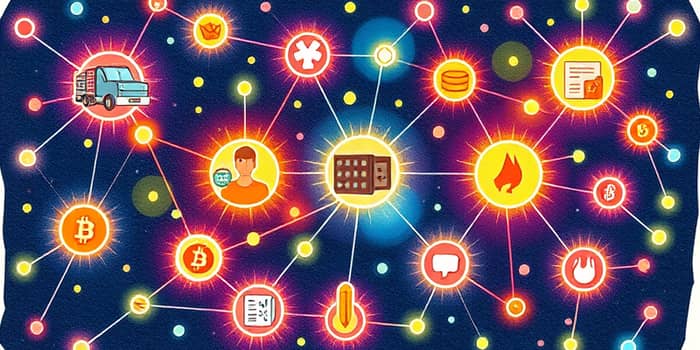
From its 2008 debut as Bitcoin’s ledger, blockchain has transcended cryptocurrency to become a foundational technology for efficiency gains and reduced intermediaries. By automating trust, enforcing transparency, and granting data ownership, it delivers new revenue models like tokenized assets across industries. This article traces blockchain’s journey and highlights its role in generating wealth beyond mere currency.
Blockchain was first conceptualized by Satoshi Nakamoto as the backbone of Bitcoin’s peer-to-peer payment system. Its core attributes—decentralization, immutability, transparency, security—enabled a trustless environment for digital value exchange. In the years that followed, researchers and practitioners began exploring applications beyond crypto.
By 2016, Yli-Huumo et al. mapped blockchain research, noting a shift from consensus algorithms to real-world implementations. In 2018, Saberi and Kamble documented its impact on supply chains and fraud mitigation. Today, smart contracts—self-executing code automating agreements—further extend blockchain’s reach, eliminating intermediaries and enforcing predefined terms across transactions.
Blockchain’s transformative potential spans ten major sectors. By acting as a unified ledger or reliable settlement layer, it unlocks wealth creation through cost savings, trust enhancement, and operational efficiency. Below is a snapshot of its cross-industry impact.
In addition to these, blockchain streamlines financial services settlements, accelerates real estate conveyance, modernizes insurance underwriting, and revolutionizes intellectual property via NFTs and smart royalty contracts. Each implementation drives tangible reductions in manual reconciliation and intermediary fees.
Blockchain generates wealth through three primary mechanisms. First, operational efficiency and automated settlements cut delays, manual errors, and reconciliation costs. Smart contracts trigger payments the moment preconditions are met, eliminating administrative overhead.
Second, enhanced trust and data integrity reduce fraud-related losses. Immutable audit trails and decentralized validation ensure that records cannot be tampered with, lowering risk and insurance premiums.
Third, blockchain enables novel asset models such as tokenization, fractional ownership, and decentralized finance (DeFi). These open up previously illiquid markets—real estate, art, and private equity—to a broader investor base, multiplying revenue streams.
A few deep dives illustrate blockchain’s real-world impact and wealth creation potential:
Despite its promise, blockchain faces hurdles. Scalability and transaction throughput remain technical bottlenecks for high-volume applications. Interoperability across diverse ledgers and legacy systems is still an open problem.
On the regulatory front, data privacy legislation and legal recognition of smart contracts vary by jurisdiction, creating uncertainty. Effective governance models and industry collaboration will be critical to surmount these barriers.
Ongoing research targets layer-2 scaling, cross-chain bridges, and privacy-preserving protocols. As these innovations mature, blockchain will achieve broader adoption, unlocking further wealth creation across global economies.
Blockchain has evolved far beyond its cryptocurrency origins into a general-purpose technology for decentralized ecosystems. By enabling transparency, trust, and automation, it redefines how value is created and exchanged. From supply chains to digital identities, from healthcare to energy trading, blockchain’s transformative power is reshaping industries and generating new forms of wealth. As technical and regulatory challenges are addressed, its impact will only intensify, heralding a future where decentralized trust underpins global prosperity.
References