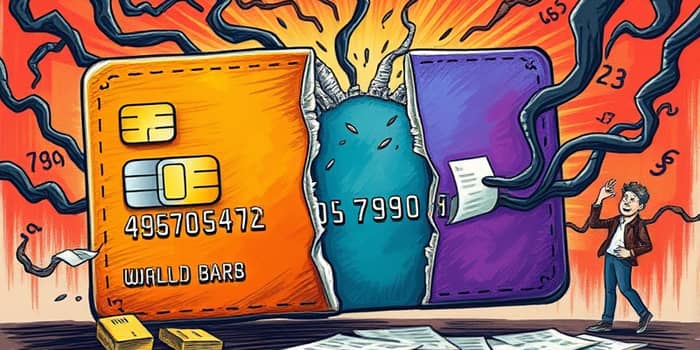
Credit cards promise convenience and rewards, but many users overlook the hidden fees buried in fine print that silently erode value. From surprise charges on your statement to merchant swipe tolls inflating prices, these costs can add up to hundreds or even thousands of dollars each year. By understanding where fees hide and how to avoid them, both consumers and businesses can reclaim control of their finances.
Hidden credit card fees come in two broad categories: those affecting individual cardholders and those imposed on merchants and businesses. Consumers may face charges for routine actions—late payments, cash advances, foreign purchases—often without realizing the full cost until they receive a statement. On the merchant side, swipe and processing fees are built into every transaction, quietly driving up the cost of goods and services.
This lack of transparency stems from complex contractual terms and statements that few read in detail. When networks like Visa and Mastercard collectively control over 80% of the market, they set interchange rates and assessments that merchants reluctantly pay and ultimately pass along to consumers. The result is a cycle where everyone pays, yet few understand the true burden.
Individual cardholders encounter a variety of fees that can complicate budgeting and increase debt. Typical costs include:
These charges can be overwhelming, especially when multiple fees compound in a single billing cycle. For instance, a forgotten payment might trigger a late fee and a penalty APR, making it far more expensive to catch up in the following months.
Merchants and businesses shoulder massive processing costs that often exceed consumer fees in total. In 2024, U.S. credit and debit swipe fees reached $187.2 billion, with Visa and Mastercard collecting over $111.2 billion combined. These expenses affect profitability and force businesses to raise prices or adopt surcharges to stay afloat.
Small businesses feel these burdens most acutely. A restaurant processing $1 million in card sales can pay $18,000–$36,000 in swipe fees alone. Hidden junk fees on statements—in the form of PCI non-compliance or monthly gateway charges—can be reduced by auditing statements and negotiating interchange-plus pricing plans.
Governments and consumer advocates have responded to these concerns with a range of regulatory measures. The Credit CARD Act of 2009 mandated clearer disclosures of interest rates and late fees for consumers. Caps on debit transaction fees (the Durbin Amendment) limit costs to roughly 21 cents per transaction, though litigation and network resistance have complicated enforcement.
Proposed reforms like the Credit Card Competition Act aim to introduce routing competition, potentially lowering merchant costs. However, banks oppose these changes, citing security and consumer protection risks. The CFPB’s annual Credit Card Market Report highlights ongoing fee creep, noting average credit interchange rates rising from 2.26% to 2.35% between 2023 and 2024.
With awareness and proactive management, both consumers and merchants can minimize unnecessary charges. Consider these approaches:
Additional tactics include monitoring spending limits to prevent over-limit fees, reviewing chargeback data to address common dispute reasons, and training employees on best practices for capturing verification information.
Ultimately, reducing the impact of hidden fees requires a shift toward clearer communication and fair pricing. Consumers should demand readable statements and educational materials from card issuers. Businesses can advocate through trade groups like the National Retail Federation and the Merchant Payments Coalition to push for competitive routing and fee caps.
By fostering an environment of open disclosure and accountability, the industry can balance profitability with consumer protection and fair market practices. Ultimately, clarity benefits everyone: consumers pay only for services they understand, and businesses operate with predictable, manageable costs.
Hidden credit card fees may seem inevitable, but they thrive on obscurity. Armed with knowledge and strategic action, consumers can avoid expensive surprises and keep borrowing costs under control. Merchants, too, can reclaim lost revenue by scrutinizing statements and demanding transparent pricing structures.
Embrace a proactive mindset: question every line item, explore alternative products, and collaborate with peers to advocate for reform. With collective effort, we can shine a light on hidden fees and build a financial ecosystem that rewards honesty and empowers informed decisions.
References