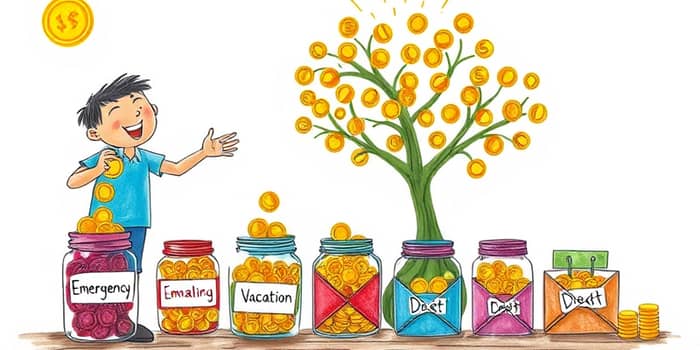
In a world of rising expenses and unpredictable emergencies, even the smallest financial moves can have a monumental impact. By embracing micro-savings—the practice of setting aside tiny amounts consistently—you can transform spare change into a robust buffer, reduce anxiety, and propel yourself toward bigger goals.
At its core, micro-savings involves small, consistent deposits—often pennies or dollars—that accumulate over time through habit formation and automation. This approach leverages the power of compounding, where each deposit, no matter how modest, contributes to a growing pool of funds.
Rather than focusing on finding large sums of money, micro-savings champions consistency over large sums. By mentally separating your savings from your spending money—using sub-accounts, jars, or prepaid cards—you establish a clear purpose for each penny and reduce the temptation to dip into reserves when surprise expenses arise.
To harness the power of micro-savings, consider implementing one or more of the following tactics. Each method is designed to be low-effort, high-impact, and adaptable to varied income levels.
Countless individuals and institutions around the globe have demonstrated how micro-savings can drive substantial change. These cases reveal the adaptability of small-scale tactics to diverse cultural and economic contexts.
Whether it’s young adults in the U.S. building emergency cushions or rural women in India using on-site agents to boost deposits, the underlying message is clear: visible progress for motivation empowers savers to keep moving forward.
While micro-savings offers immense potential, savers must navigate common pitfalls to maximize long-term success.
To deepen your commitment, look for tangible incentives: matched savings from employers or nonprofits, micro-insurance benefits, or community recognition within savings groups. These motivators, combined with physical tools build trust, can dramatically improve retention rates.
Psychologically, micro-savings leverages mental framing for success. By viewing each deposit as a positive step—rather than a sacrifice—you cultivate a mindset of growth. Over time, the momentum generated by consistent deposits morphs into a powerful habit, reducing impulse spending and financial stress.
Ready to begin? Follow this simple roadmap:
1. Choose your method: automated transfers, round-ups, jars, or prepaid cards. Select the approach that aligns with your lifestyle.
2. Decide on an entry point: start as low as $1–$2 per day to ensure you succeed and build confidence quickly.
3. Open a dedicated savings sub-account or prepare physical envelopes for your goals: emergencies, debt relief, or future plans.
4. Set a S.M.A.R.T. target: for example, “Save $60 per month toward a $500 emergency fund within eight months.”
5. Monitor and celebrate: review your progress monthly, adjust as needed, and reward yourself for hitting milestones.
6. Scale up thoughtfully: once your initial goal is met, increase your daily deposit or automate higher contributions to accelerate your growth.
By integrating micro-savings into your financial routine, you build resilience against unexpected costs, reduce reliance on high-interest debt, and cultivate a sense of achievement. Remember, tiny actions lead to big results. Every penny saved is a step toward freedom, security, and the realization of your dreams.
Start today: the path to financial empowerment begins with the smallest seed—a penny saved, a habit formed, a future transformed.
References