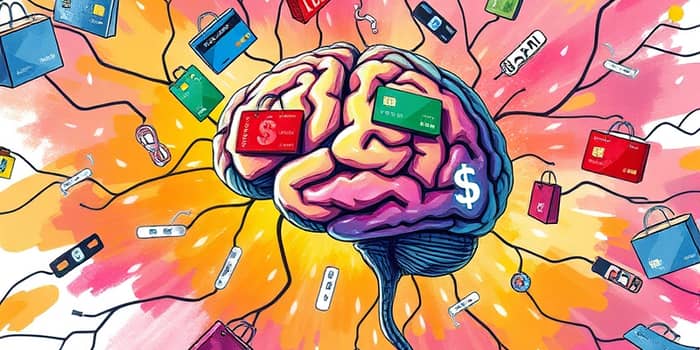
Have you ever wondered why you spend more freely with a credit card than with cash in your wallet?
It's not just a coincidence; it's rooted in how our brains respond to payment methods.
Credit cards systematically shift our spending by reducing the pain of paying, activating reward centers, and forming habits that can lead to debt.
This phenomenon links psychology, neuroscience, and personal finance to explain why we often overspend without realizing it.
Understanding these mechanisms can empower you to make more mindful financial choices and break free from unhealthy patterns.
At its core, credit card use influences what we buy, how much we spend, and how we feel about it.
This happens through several interconnected psychological concepts that shape our daily decisions.
Research shows that people spend 12–18% more on average with credit cards compared to cash.
This increase isn't random; it's driven by how our minds process money and rewards.
The pain of paying refers to the psychological discomfort we feel when parting with money.
Cash creates an immediate and vivid sense of loss, which makes us think twice before spending.
Credit cards, however, anesthetize this pain by making transactions feel abstract and delayed.
When this pain is lower, people are more willing to overspend and indulge in non-essential purchases.
This effect is particularly strong for tightwads versus spendthrifts, with tightwads experiencing a dramatic reduction in payment pain when using cards.
Neuroscience reveals that credit cards sensitize reward networks in the brain, specifically in the striatum, a dopamine-rich area.
This means that swiping or tapping a card can trigger a dopamine surge, similar to what happens in addictive behaviors.
The act of purchasing with a credit card becomes a conditioned response, where cues like logos or payment terminals spark spending urges.
This rewiring explains why impulse buying is so common with credit cards, often driven by emotional triggers like stress or boredom.
Studies provide concrete data on how credit cards alter spending habits.
For instance, in an MIT silent auction, bidders using credit cards bid more than twice as much as cash bidders for the same tickets.
This suggests that the psychological cost of spending with a card is only about half that of cash.
Neuroimaging studies show stronger activation in reward regions when purchases are made with credit cards.
This aligns with increased reward sensitivity and potential habit formation risks.
Credit cards encourage mental accounting, where people frame purchases as using credit or points rather than real money.
Thoughts like "I'll pay it off later" or "the minimum payment is small" make large purchases feel more acceptable.
Payment coupling, or how closely payment is tied to purchase, is decoupled with credit cards.
This means you enjoy the item now but pay weeks later, making future costs seem less significant.
It's a key reason why people often overspend on credit cards and struggle with debt repayment.
Repeated credit card use can lead to habit loops that are hard to break.
These loops involve cues, routines, and rewards that reinforce spending behavior over time.
For example, seeing a credit card logo or using a mobile payment app can trigger an automatic urge to spend.
Understanding these patterns is the first step toward regaining control over your finances.
Issuers intentionally design features to drive card usage and maximize spending.
They tap into consumer psychology through rewards programs, gamification, and security messaging.
These tactics can lead to mental gymnastics, where people justify fees by overestimating rewards.
Being aware of these strategies helps you resist manipulation and make informed choices.
To counteract the psychological effects of credit cards, adopt mindful strategies that promote financial health.
Start by recognizing your personal triggers, such as emotional states or environmental cues that lead to overspending.
Consider switching to cash for certain purchases to reintroduce the pain of paying and increase awareness.
By implementing these steps, you can harness the benefits of credit cards without falling into debt traps.
Remember, knowledge is power; understanding the psychology behind spending empowers you to make choices aligned with your goals.
Embrace a proactive approach to finance, where you control your habits rather than letting them control you.
With persistence and self-awareness, you can transform your relationship with money and build a secure financial future.
References