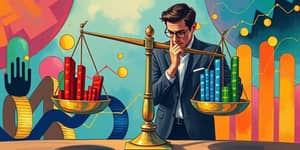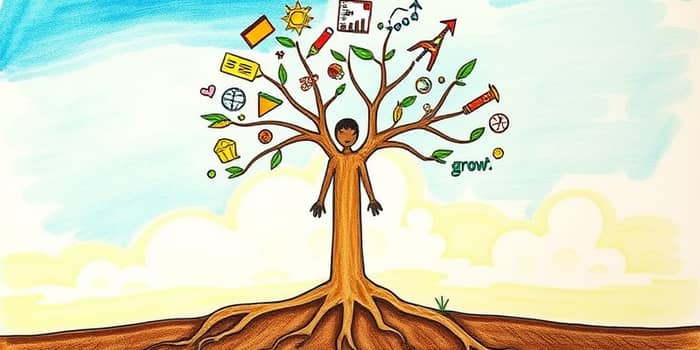
In a world driven by technology and fast-paced change, the most enduring asset we possess is ourselves. Our knowledge, our health, our networks and our emotional resilience combine to form what economists call human capital. This is an investment that yields both personal fulfillment and long-term economic returns.
At its core, human capital encompasses employee knowledge, skills, abilities, experience and intelligence. It also includes health, emotional resilience and social networks. When you invest in yourself—through education, training, wellness or building relationships—you strengthen this capital.
Human capital can be viewed in three interconnected dimensions:
Together, these form a unique portfolio that can adapt and grow over time.
Studies show that human capital is nearly 2.5 times more valuable than physical assets like real estate and equipment. Remarkably, for every $1 invested in human capital, $11.39 is added to GDP. These figures illustrate that personal growth does not just benefit the individual—it lifts communities and entire economies.
Unlike machines that depreciate, knowledge and skills often have increasing rates of return. As you learn more, you become a faster learner. Health investments, such as proper nutrition and exercise, improve productivity today and set a foundation for future gains.
Two foundational pillars underpin human capital development: education and health. The World Bank’s Human Capital Index (HCI) tracks how well countries prepare children to thrive. A score of 0.7 in the United States means a child born today will reach 70 percent of their productivity potential if fully educated and healthy.
Work experience accounts for up to 60 percent of an individual’s human capital in some nations. Continued training and upskilling are therefore critical. But without health—both physical and mental—capacity to learn and perform declines.
As AI and automation transform industries, a human-centric approach to technology becomes essential. Deloitte research reveals that organizations prioritizing people are 1.6 times more likely to realize AI benefits than those focused only on tech.
Skills evolve rapidly, and one-third of workers have faced 15 major changes in the past year alone. By cultivating adaptability and emotional intelligence, individuals can navigate shifting roles and emerging opportunities.
Investing in yourself begins with clear, actionable steps. Consider these practical strategies:
Each of these components compounds over time, creating a multiplier effect on your overall capacity.
To ensure investments pay off, establish clear metrics. Track hours spent learning, certifications earned and exercise routines maintained. Set quarterly goals for new connections or projects completed. Review your progress to identify gaps and celebrate milestones.
Some organizations use scorecards to balance financial results with human capital growth. If you create a personal dashboard, include indicators for skill acquisition, health metrics and social engagement. Visualizing progress can fuel motivation and reveal trends.
Investing in human capital often competes with immediate demands. Work deadlines, family responsibilities and financial pressures can deprioritize personal growth. To overcome this:
Small, consistent actions can accumulate into substantial long-term gains.
Ultimately, investing in your human capital is the most reliable path to resilience. As economies shift, those who cultivate adaptable skills, robust health and strong networks will thrive. This journey is not a luxury—it’s an essential strategy for personal and societal well-being.
Your next step: identify one skill you want to master, set a realistic timeframe, and commit to daily progress. Pair it with a health habit, such as a morning walk or meditation, and reach out to a mentor or peer for support. These actions represent compounding investments that will yield dividends throughout your life.
By embracing continuous learning, health optimization and emotional agility, you not only enhance your own potential but also contribute to a more innovative and prosperous society. The true value of human capital lies in our collective capacity to grow, adapt and uplift one another.
At a time when change is accelerating, the smartest investment you can make is in yourself. Whether you are a student, a seasoned professional or someone reentering the workforce, prioritizing education, health and networks will pay immediate and future rewards. Step forward with intention, and watch your human capital flourish.
References